
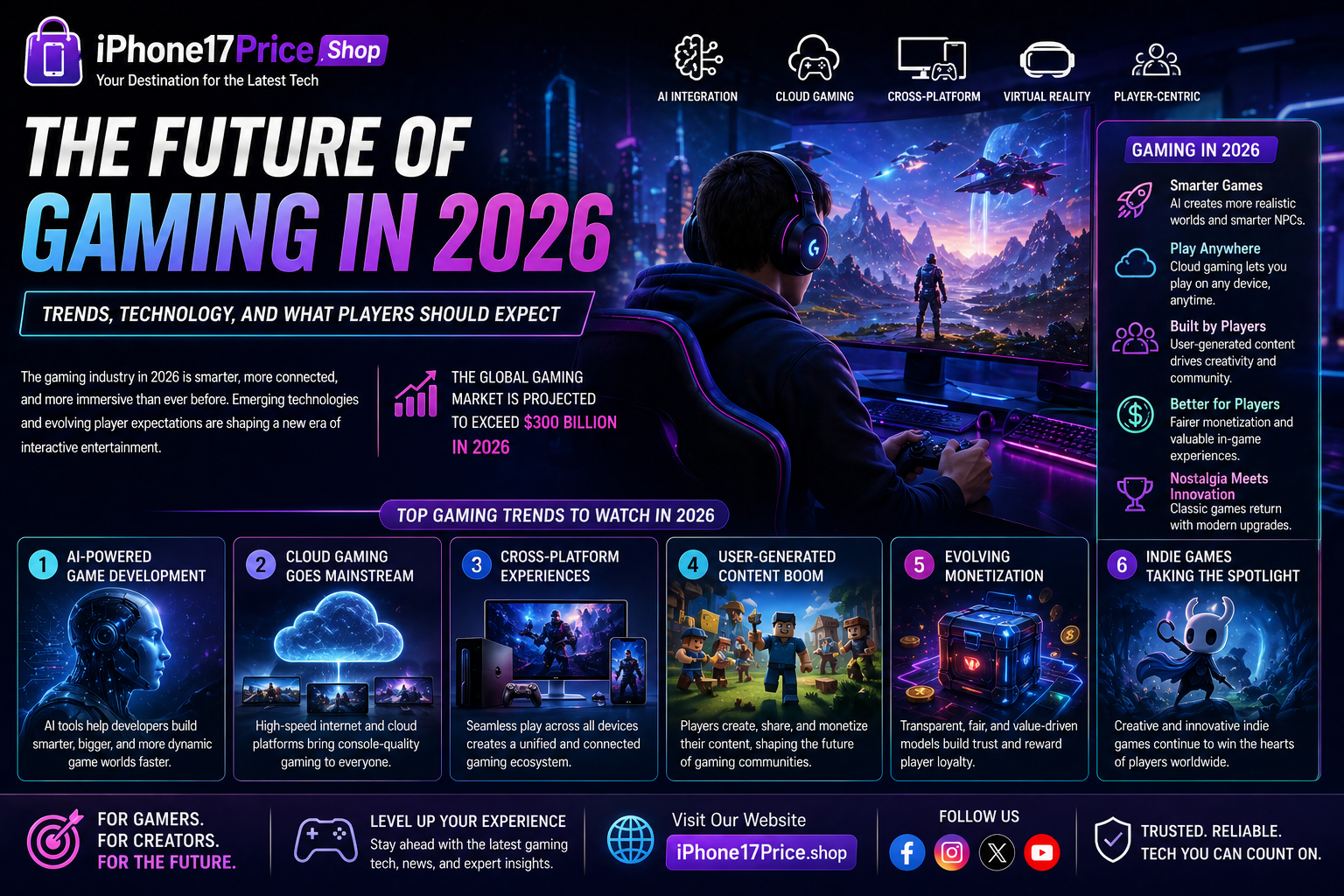
The Future of Gaming in 2026: Trends, Technology, and What Players Should Expect
The gaming industry in 2026 is evolving faster than ever before. From artificial intelligence to cloud gaming, developers and publishers are redefining how players experience interactive entertainment. What was once a simple hobby has now become a global ecosystem worth billions, influencing technology, culture, and even education.
For gamers, creators, and investors alike, understanding where the industry is heading is essential. This article explores the biggest gaming trends of 2026 and what they mean for the future.
1. Artificial Intelligence Is Reshaping Game Development
One of the biggest changes in 2026 is the integration of AI into game design and development.
Studios now use AI tools for:
- Faster world-building
- Smarter NPC behavior
- Automated quality assurance
- Personalized player experiences
- Dynamic storytelling
AI is helping developers reduce production time while creating more responsive and immersive gameplay. Instead of replacing creativity, AI is becoming a tool that enhances it.
Industry experts note that AI is being used mostly behind the scenes for operations, prototyping, and scaling live-service content rather than fully replacing human designers.
2. Cross-Platform and Cloud Gaming Are Expanding
Gaming is no longer tied to one device.
In 2026, players expect seamless access across:
- PCs
- Consoles
- Smartphones
- Tablets
- Smart TVs
- Cloud platforms
Cloud gaming continues to grow as internet infrastructure improves worldwide. This allows gamers to play high-performance titles without expensive hardware.
Platform convergence is becoming a defining trend, breaking traditional barriers between console, PC, and mobile ecosystems.
3. User-Generated Content Is Driving Engagement
Games like Roblox and Fortnite continue to lead the way in creator-driven experiences.
Players are no longer just consumers—they are creators.
This shift has fueled:
- Custom maps
- Community-designed items
- Virtual concerts
- In-game businesses
- Educational simulations
User-generated ecosystems create longer-lasting engagement and open new revenue streams for both developers and players.
4. Monetization Models Are Becoming More Player-Friendly
In the past, aggressive microtransactions caused backlash. In 2026, studios are shifting toward more sustainable and transparent monetization.
Popular strategies now include:
- Cosmetic-only purchases
- Value-driven battle passes
- Subscription bundles
- Direct-to-consumer web stores
- Limited-time premium content
Developers are prioritizing fairness and trust to improve long-term player loyalty. This transition is seen as a major business shift in the industry.
5. Nostalgia and Remasters Remain Powerful
Classic franchises are making a strong comeback in 2026.
Remastered editions, retro-inspired visuals, and revived gaming brands continue to attract both older players and younger audiences.
Why?
Because nostalgia sells.
Longtime gamers now have greater spending power, making remakes and legacy titles highly profitable for publishers.
6. The Rise of Smaller, More Creative Games
While blockbuster AAA titles still dominate headlines, many players are gravitating toward smaller, highly polished indie games.
Community discussions on Reddit increasingly highlight how “low-spec” or creatively focused games often feel fresher and more enjoyable than large-scale productions.
This trend suggests that innovation and game feel matter more than raw graphical power.
Developers who focus on gameplay quality rather than size alone are gaining stronger player loyalty.
Why This Matters for Gamers and Developers
The future of gaming is no longer about just better graphics or faster consoles.
It is about:
- Accessibility
- Creativity
- Community
- Personalization
- Fair monetization
For players, this means richer experiences and more freedom.
For developers, it means adapting to a rapidly changing ecosystem where flexibility and innovation are critical.
Consultation for Gaming Industry Businesses
If you are launching a gaming blog, esports brand, gaming app, or digital gaming marketplace, staying ahead of 2026 trends is crucial for success.
Professional consultation can help with:
- Gaming SEO strategies
- Market research
- Audience targeting
- Content planning
- Monetization optimization
- Brand positioning in the gaming niche
Businesses that align with future gaming trends early will have a major competitive advantage.
Final Takeaway
Gaming in 2026 is smarter, broader, and more connected than ever before.
Artificial intelligence, cloud technology, creator-driven platforms, and player-focused business models are shaping a new era of entertainment.
Whether you are a gamer, developer, investor, or entrepreneur, the opportunities in this evolving industry are enormous.
The future of gaming is not just about playing—it is about participating in an interactive digital world that continues to expand every year.