
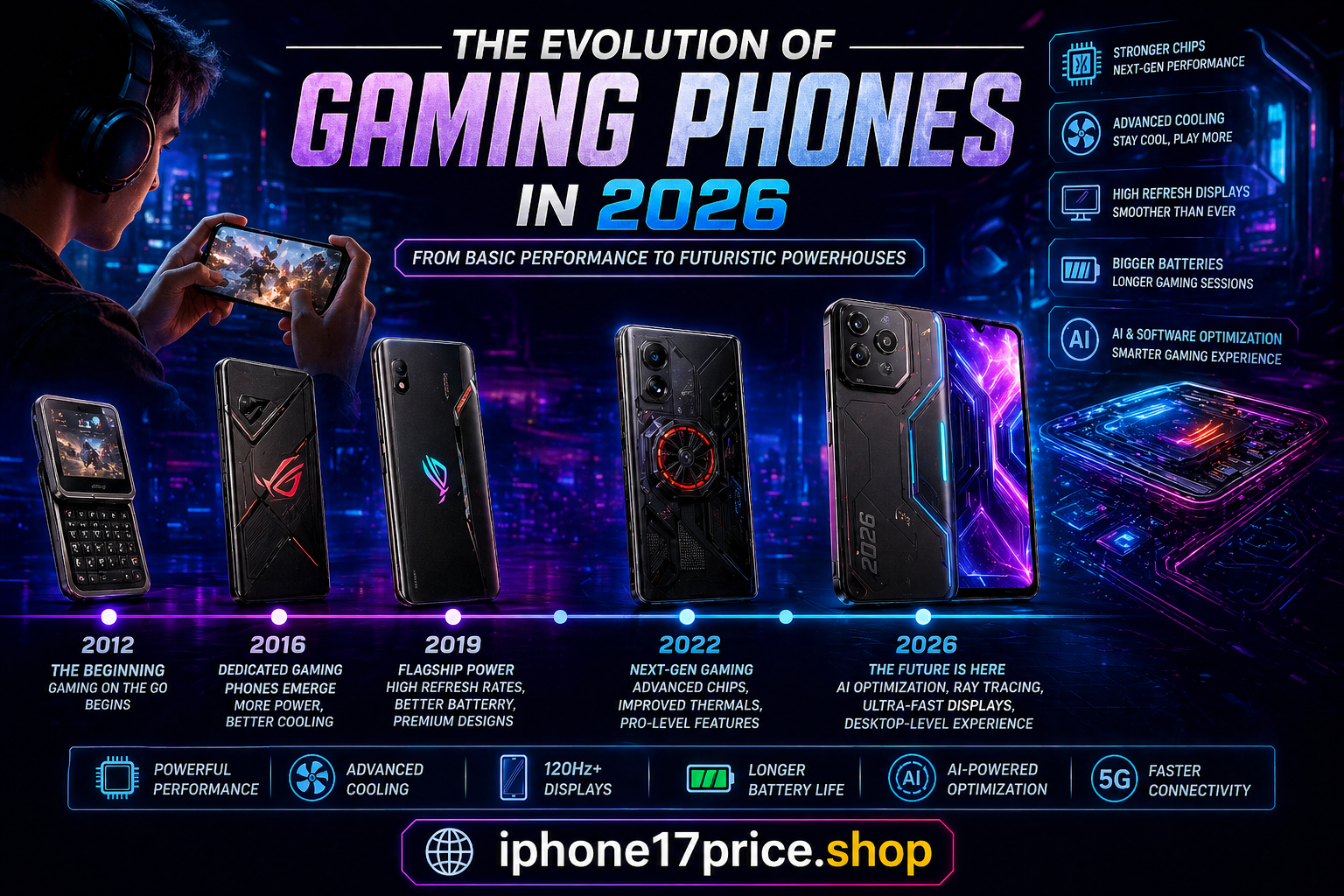
The Evolution of Gaming Phones: How Mobile Devices Became True Gaming Machines
Mobile gaming has transformed dramatically over the past decade. What was once seen as a casual pastime has evolved into a global industry worth billions, driven by technological advancements and a rapidly growing player base. At the center of this revolution stands a category of devices built specifically for performance—the gaming phone.
In 2026, gaming phones will no longer be niche products reserved for a small audience. They have become powerful, stylish, and highly capable machines that challenge the limits of what smartphones can achieve. To understand their significance today, it is worth exploring how gaming phones evolved into the true gaming machines we know now.
The Early Days of Mobile Gaming
The roots of mobile gaming stretch back to the late 1990s and early 2000s, when simple games like Snake introduced users to entertainment on handheld devices. These early experiences were basic, monochrome, and limited by hardware constraints.
As smartphones became more advanced, app stores opened the door to downloadable games. Titles such as Angry Birds, Temple Run, and Clash of Clans proved that mobile gaming could attract massive audiences. Yet even as the popularity of mobile gaming increased, the devices themselves were not designed with gamers in mind.
Most smartphones focus on cameras, design, and general performance rather than sustained gaming capabilities.
The Birth of Gaming Phones
The first true gaming phones emerged as manufacturers recognized the growing demand for mobile performance. Brands began experimenting with specialized hardware, including larger batteries, improved cooling, and higher refresh-rate displays.
These devices targeted players who wanted smoother gameplay and better control.
Early gaming phones often looked aggressive and futuristic, emphasizing their gaming identity. While some critics viewed them as gimmicks, they introduced features that would later become mainstream.
Among these innovations were:
- shoulder triggers
- enhanced haptics
- custom gaming interfaces
- dedicated cooling systems
These additions laid the foundation for future generations.
Hardware That Changed the Industry
The success of gaming phones was closely tied to rapid improvements in smartphone hardware.
Powerful Processors
Flagship chipsets became capable of running console-quality games. This allowed gaming phones to deliver high frame rates and advanced graphics.
High Refresh-Rate Displays
The shift from 60Hz screens to 120Hz, 144Hz, and beyond transformed mobile gaming. Players gained smoother visuals and faster responsiveness.
Advanced Cooling Systems
Heat management became critical as games grew more demanding. Vapor chambers, graphite layers, and active cooling fans helped maintain performance.
Larger Batteries
Gaming requires power. Manufacturers responded with batteries exceeding 5000mAh and ultra-fast charging solutions.
Software Innovation and Gaming Ecosystems
Hardware alone was not enough.
Gaming phones introduced software tools designed to enhance the player experience.
These included:
- performance optimization modes
- notification blocking
- customizable controls
- live streaming support
Manufacturers also created ecosystems of accessories such as cooling docks, controllers, and external displays.
This expanded gaming phones into complete entertainment platforms.
The Role of Esports and Streaming
The rise of mobile esports accelerated the demand for gaming phones.
Competitive titles attracted professional players, tournaments, and sponsorships. Devices built for gaming became essential for serious competitors.
Streaming culture also played a role.
Gamers wanted phones capable of recording, editing, and broadcasting content without sacrificing performance.
As a result, gaming phones evolved beyond pure gameplay devices into tools for creators and professionals.
Why Gaming Phones Matter in 2026
In 2026, gaming phones represent the cutting edge of mobile technology.
They matter because they push innovation in areas that benefit all smartphones.
Features once exclusive to gaming phones—such as high refresh rates and improved cooling—have influenced the broader industry.
At the same time, dedicated gaming models continue to lead in performance-focused design.
For consumers, gaming phones offer:
- elite performance
- long-lasting batteries
- immersive displays
- specialized controls
They are no longer luxury gadgets but practical choices for power users.
Consultation – Who Should Consider a Gaming Phone?
Competitive Players
Those focused on speed and precision benefit most.
Content Creators
Strong processors and displays support editing and streaming.
Tech Enthusiasts
Gaming phones showcase the latest mobile innovations.
Everyday Users
Even non-gamers can enjoy the superior battery life and performance.
The Future of Gaming Phones
The future promises even more innovation.
Cloud gaming, AI-assisted performance tuning, and foldable gaming devices are likely to shape the next era.
As mobile hardware continues advancing, gaming phones may eventually rival dedicated handheld consoles.
The line between smartphone and gaming machine will continue to blur.
Conclusion
The evolution of gaming phones is a story of adaptation, innovation, and demand.
From simple beginnings to high-performance devices, these smartphones have become true gaming machines capable of delivering console-like experiences.
In 2026, gaming phones stand as proof that mobile devices can be more than communication tools—they can be powerful entertainment systems, creative platforms, and competitive instruments.
For anyone passionate about technology or gaming, their journey is one of the most fascinating developments in the smartphone industry.